
Why 2026 Could Become Ghana’s Breakout Year
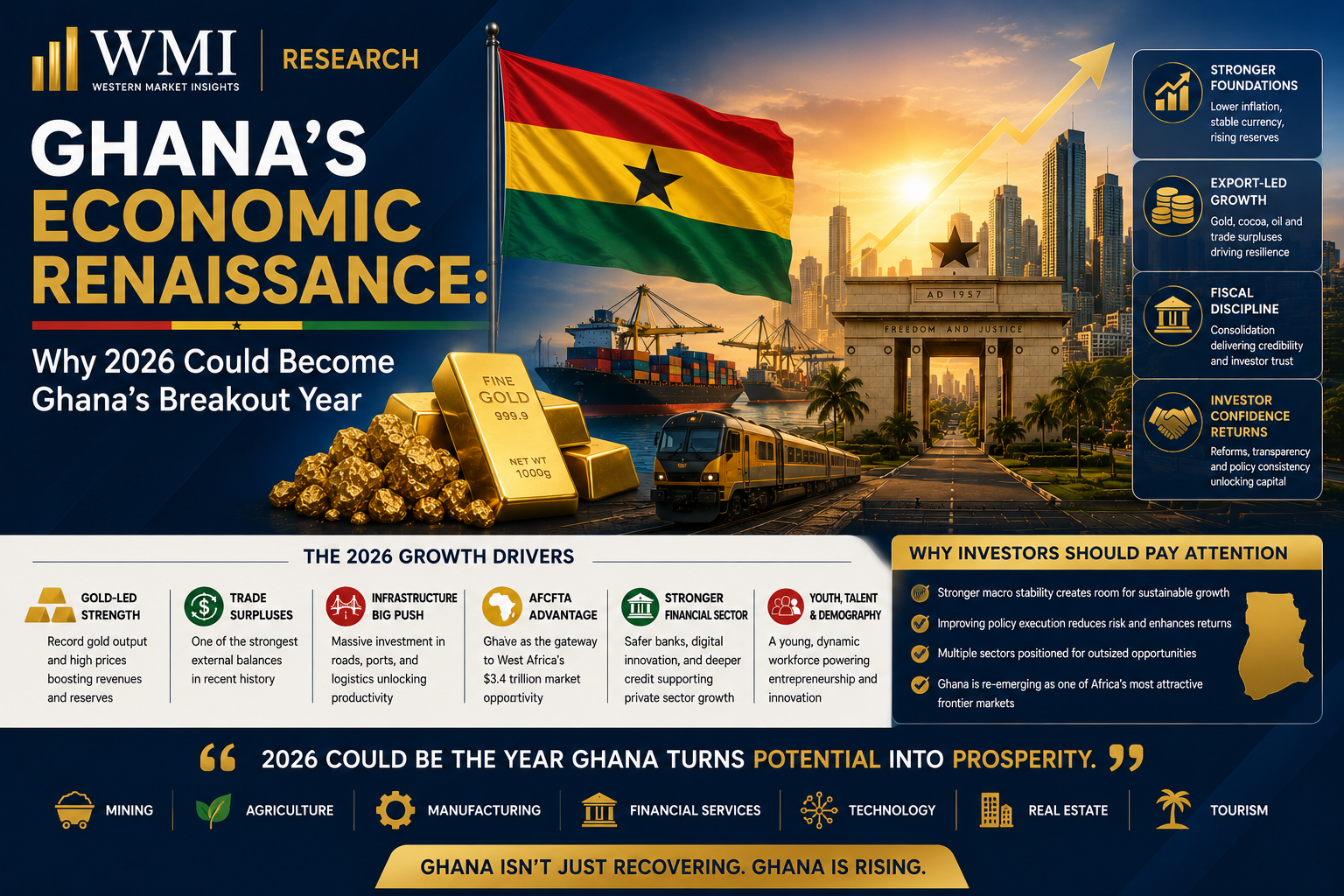
Ghana’s Economic Renaissance: Why 2026 Could Become Ghana’s Breakout Year
WMI Macro Intelligence Report | Special Analysis
For much of the past decade, discussions about Ghana’s economy have often revolved around familiar concerns: Inflation, Currency depreciation, Debt sustainability, Fiscal slippages, and External vulnerabilities. Today, a different conversation is emerging. The latest Monetary Policy Report from the Bank of Ghana suggests that Ghana may be entering one of the strongest macroeconomic positions it has enjoyed in years. Inflation has collapsed. Interest rates are falling. Foreign reserves are rising. The banking sector is healing. The stock market is booming. The Cedi has stabilized. Most importantly, economic growth is accelerating. Yet investors should not mistake this recovery for a normal cyclical rebound. What is unfolding may represent the early stages of a structural economic reset. The critical question now is whether Ghana can convert this macroeconomic stability into long-term prosperity.
The Great Inflation Collapse
Just twelve months ago, inflation remained one of the biggest threats to economic stability. Today, the picture looks dramatically different. Headline inflation has fallen to 3.3 percent, comfortably below the Bank of Ghana’s medium-term target band. Core inflation continues to moderate while inflation expectations among consumers, businesses, and financial institutions remain firmly anchored. This is more than a statistical victory. It represents a restoration of confidence. For households, it means improved purchasing power. For businesses, it means better planning and reduced uncertainty. For investors, it means lower risk premiums.
Analyst Commentary
The inflation story may be the most important economic development in Ghana today. A country cannot sustain investment-led growth without price stability. Ghana is finally rebuilding that foundation.
The Bank of Ghana Has Changed the Investment Landscape
One of the most dramatic shifts occurring beneath the surface is monetary policy.
The Bank of Ghana has reduced the Monetary Policy Rate from crisis-era levels to 14 percent after another 150 basis-point cut. Lending rates have declined sharply while financial conditions remain supportive. This has profound implications. The age of earning attractive returns simply by sitting in Treasury Bills is fading. Capital is beginning to search for higher-return opportunities. Historically, these transitions have benefited: Equities, Banks, Corporate bonds, Real estate and Productive businesses.
Analyst Commentary
We are witnessing the beginning of a major asset reallocation cycle. Investors who remain entirely positioned in short-term instruments risk being left behind.
Gold Is Quietly Transforming Ghana’s Economic Outlook
While much attention remains focused on inflation and interest rates, the most powerful force supporting Ghana’s economy is gold. International gold prices surged more than 70 percent year-on-year, reaching record levels as investors worldwide sought safety amid geopolitical uncertainty. Gold export receipts increased by more than 84 percent in the first two months of 2026. This gold boom has generated: Strong foreign exchange inflows, Rising reserves, Improved fiscal flexibility and Greater exchange-rate stability. Gold has effectively become Ghana’s economic insurance policy.
Analyst Commentary
If there is one chart every Ghanaian investor should follow in 2026, it is the gold price. Gold is currently doing more to support the economy than any policy intervention.
Cocoa Is No Longer Carrying the Economy
For decades, cocoa was synonymous with Ghana’s export story. That reality is changing. International cocoa prices have collapsed while global demand remains weak. Cocoa export earnings declined significantly during the review period. This development carries serious implications: Reduced export revenues, Pressure on COCOBOD, Lower rural incomes, Weaker foreign exchange generation for now, gold is offsetting these weaknesses. But over the longer term, Ghana must rethink its dependence on raw commodity exports.
The External Sector Is Becoming a Strategic Strength
One of the strongest indicators of economic health is the country’s external position. Here, Ghana is making remarkable progress. The trade surplus increased by more than 70 percent to nearly US$3.7 billion in the first two months of 2026. Gross International Reserves climbed to approximately US$14.5 billion, providing almost six months of import cover.
These matters because strong reserves: Support the Cedi, reduce sovereign risk, improve investor confidence and Enhance resilience against global shocks.
Analyst Commentary
The reserve story may be even more important than the inflation story. Strong reserves give policymakers options. Weak reserves remove them.
Why the Cedi Is No Longer the Problem
For years, investors viewed the Cedi as Ghana’s greatest vulnerability.
Today, that perception is changing. Improved reserves, strong gold inflows, and disciplined macroeconomic management have significantly reduced exchange-rate pressures. The Bank of Ghana notes that the Cedi has been far less volatile in 2026 than in recent years.
This stability has powerful implications for: Importers, Manufacturers, Foreign investors, and Inflation management.
Analyst Commentary
Currency stability is becoming one of Ghana’s competitive advantages. Investors are beginning to notice.
Growth Is Accelerating Across the Economy
The growth story is broadening. Real GDP expanded by 6.0 percent in 2025, while non-oil GDP accelerated to 7.6 percent. Services and agriculture led the expansion, supported by stronger consumer spending, industrial activity, trade, and credit growth.
High-frequency indicators show: Rising vehicle registrations, Stronger industrial electricity consumption, Increased port activity, Expanding private sector credit and Higher business confidence. These are often early indicators of sustained economic expansion.
The Banking Sector Is Emerging Stronger Than Expected
Following the banking sector cleanup and the Domestic Debt Exchange Program (DDEP), many analysts expected a prolonged recovery. That has not happened. The banking system is strengthening. Deposits are growing. Assets are expanding. Credit conditions are improving. The NPL ratio continues to decline while profitability and capital adequacy improve.
Analyst Commentary
The banking sector has moved from survival mode to growth mode. That transition is critical for Ghana’s next phase of economic development.
The Biggest Risk Nobody Should Ignore
Despite the optimism, risks remain. The most immediate threat comes from geopolitics. The Bank of Ghana warns that prolonged tensions in the Middle East could push oil prices above US$100 per barrel, reigniting global inflation and tightening financial conditions. Such developments could increase Ghana’s import bill, weaken reserve accumulation, and place pressure on the Cedi.
In other words: Ghana’s domestic fundamentals are improving. The biggest risks increasingly come from abroad.
WMI Investment Strategy for 2026
- OVERWEIGHT
- Gold and Mining
The strongest beneficiary of current global trends.
- Banking Stocks
Healthier balance sheets and improving profitability.
- Ghana Equities
Supported by falling rates and rising confidence.
- Export-Oriented Businesses
Particularly firms benefiting from gold-related activity.
- NEUTRAL
- Government Bonds
Still attractive, but declining yields reduce future upside.
- UNDERWEIGHT
- Short-Term Treasury Bills
The era of exceptionally high yields is over.
- Cocoa-Dependent Businesses
Facing significant earnings uncertainty.
Final Verdict: Ghana’s Best Story in Years
A year ago, investors were focused on Ghana’s risks. Today, they are beginning to focus on Ghana’s opportunities. Inflation is under control. Growth is accelerating. The banking system is recovering. The external sector is strengthening. Foreign reserves are rising. The currency is stabilizing. The stock market is responding. This does not mean challenges have disappeared. But it does mean the balance of risks is shifting.
For the first time in years, Ghana’s macroeconomic narrative is being driven more by opportunity than crisis.
WMI Outlook
Ghana is transitioning from stabilization to expansion. If policymakers maintain fiscal discipline and external conditions remain supportive, 2026 could be remembered as the year Ghana’s recovery became irreversible.
WMI Rating on Ghana: POSITIVE
Key Theme for 2026: From Crisis Management to Growth Leadership.