

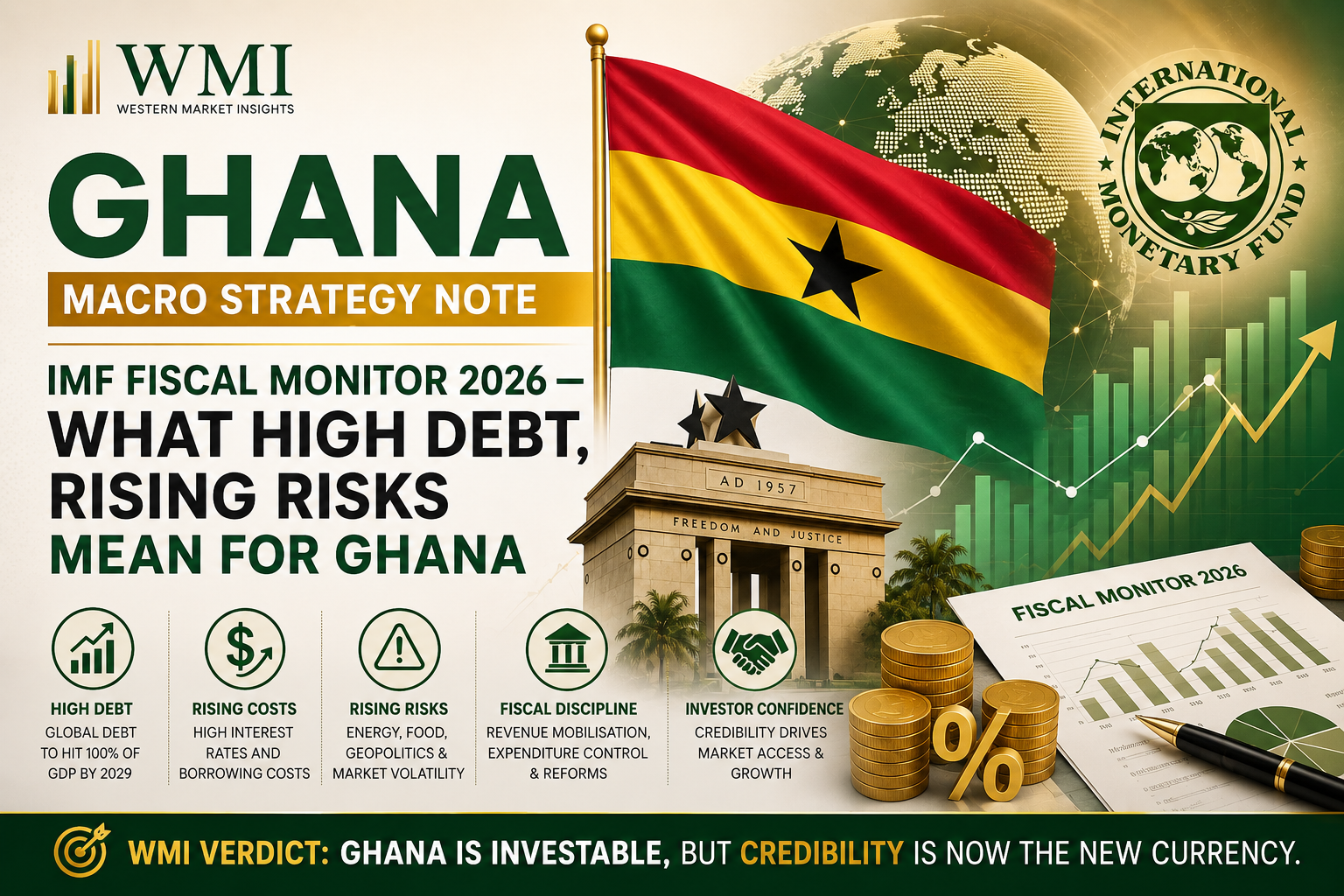
Ghana Macro Strategy Note

Ghana Macro Strategy Note
IMF Fiscal Monitor 2026 — What High Debt, Rising Risks Mean for Ghana
Executive View
The IMF’s April 2026 Fiscal Monitor sends a clear warning: the global fiscal environment has entered a harder regime. Debt is high, borrowing costs remain elevated, fiscal buffers are thin, and markets are becoming less patient with governments that delay consolidation. For Ghana, this is not just a global headline. It directly affects debt sustainability, Eurobond market access, Treasury bill pricing, exchange-rate stability, inflation management, investor confidence, and the government’s ability to finance growth-supporting expenditure.
WMI’s House View
Ghana’s post-debt-restructuring recovery is entering its most delicate phase. The debt exchange may have reduced immediate repayment pressure, but the country now faces a tougher global funding environment. The next phase of Ghana’s recovery will depend less on debt relief and more on fiscal credibility, revenue mobilization, expenditure discipline, and investor trust.
Key Global Message from the IMF
The IMF argues that global public debt is still rising and could reach about 100% of GDP by 2029. Interest costs are rising, aid flows are weakening, and shocks from energy prices, geopolitical conflict, protectionism, and tighter financial conditions are putting pressure on vulnerable economies. For low-income countries, the IMF’s message is especially important: domestic revenue mobilization is now critical because external aid is declining and debt-service costs are crowding out priority spending.
Ghana Impact: Five Transmission Channels
- Borrowing Costs Will Remain Structurally Sensitive
Ghana’s domestic debt market will remain exposed to investor confidence. Even after restructuring, investors will demand evidence of fiscal discipline before accepting lower yields sustainably. If fiscal slippage returns, Treasury bill rates could rise again, increasing government interest costs and crowding out private-sector credit.
- Eurobond Market Re-entry Will Require Credibility
Global investors are becoming more selective. Ghana’s successful return to international markets will depend on consistent primary surpluses, lower inflation, stable reserves, and credible debt-management communication. The IMF report implies that markets will punish weak fiscal frameworks faster than before.
- Fuel and Food Shocks Remain Major Fiscal Risks
The IMF highlights energy and food shocks as key threats to fiscal stability. Ghana, as an energy importer with fuel-price pass-through effects, remains vulnerable. Any attempt to cushion households through broad subsidies could weaken the budget. The better option is targeted support for vulnerable households while allowing price signals to work.
- Revenue Mobilisation Is No Longer Optional
Ghana’s fiscal recovery cannot rely only on expenditure cuts. The country needs stronger tax administration, digital revenue systems, reduced exemptions, better property-rate mobilization, and improved compliance. The IMF’s emphasis on tax-administration reform aligns directly with Ghana’s need to raise revenue without overburdening the formal sector.
- SOE and Contingent Liability Risks Must Be Watched
Ghana’s fiscal story is not only about central government debt. State-owned enterprises, energy-sector arrears, public-private partnerships, and unpaid obligations can migrate onto the public balance sheet. Investors will increasingly price these hidden liabilities into Ghana risk.
Market Implications
Fixed Income: Ghana cedi bonds and Treasury bills may remain attractive, but the trade is now credibility-driven. Falling inflation and fiscal discipline support lower yields; policy slippage reverses the trend.
Currency: The cedi’s outlook depends on reserves, external inflows, cocoa and gold receipts, IMF program performance, and confidence in fiscal consolidation.
Banking Sector: Lower government yields could gradually improve private-sector credit conditions, but banks will remain cautious if fiscal risks rise.
Equities: Fiscal stability supports financials, consumer names, and industrials. However, higher taxes, utility tariff pressures, and weak disposable income could weigh on margins.
Businesses: Companies should prepare for a policy environment focused on tax compliance, cost control, and reduced fiscal subsidies.
Policy Recommendations for Ghana
Ghana should prioritize four actions:
First, maintain fiscal consolidation without reversing growth. Second, broaden the tax base through compliance and digitalization rather than excessive rate increases. Third, avoid broad fuel and utility subsidies. Fourth, communicate fiscal targets clearly to investors, citizens, and businesses.
Bottom Line
The IMF Fiscal Monitor is a warning that the easy part of Ghana’s recovery is over. Debt restructuring created breathing space; it did not create permanent fiscal space. Ghana’s next macroeconomic advantage will come from credibility. For investors, Ghana remains a recovery story — but no longer a blind yield story. The winners will be those who track fiscal discipline, debt-service trends, exchange-rate stability, and policy execution before chasing returns.
WMI Verdict: Ghana is investable, but credibility is now the new currency.